
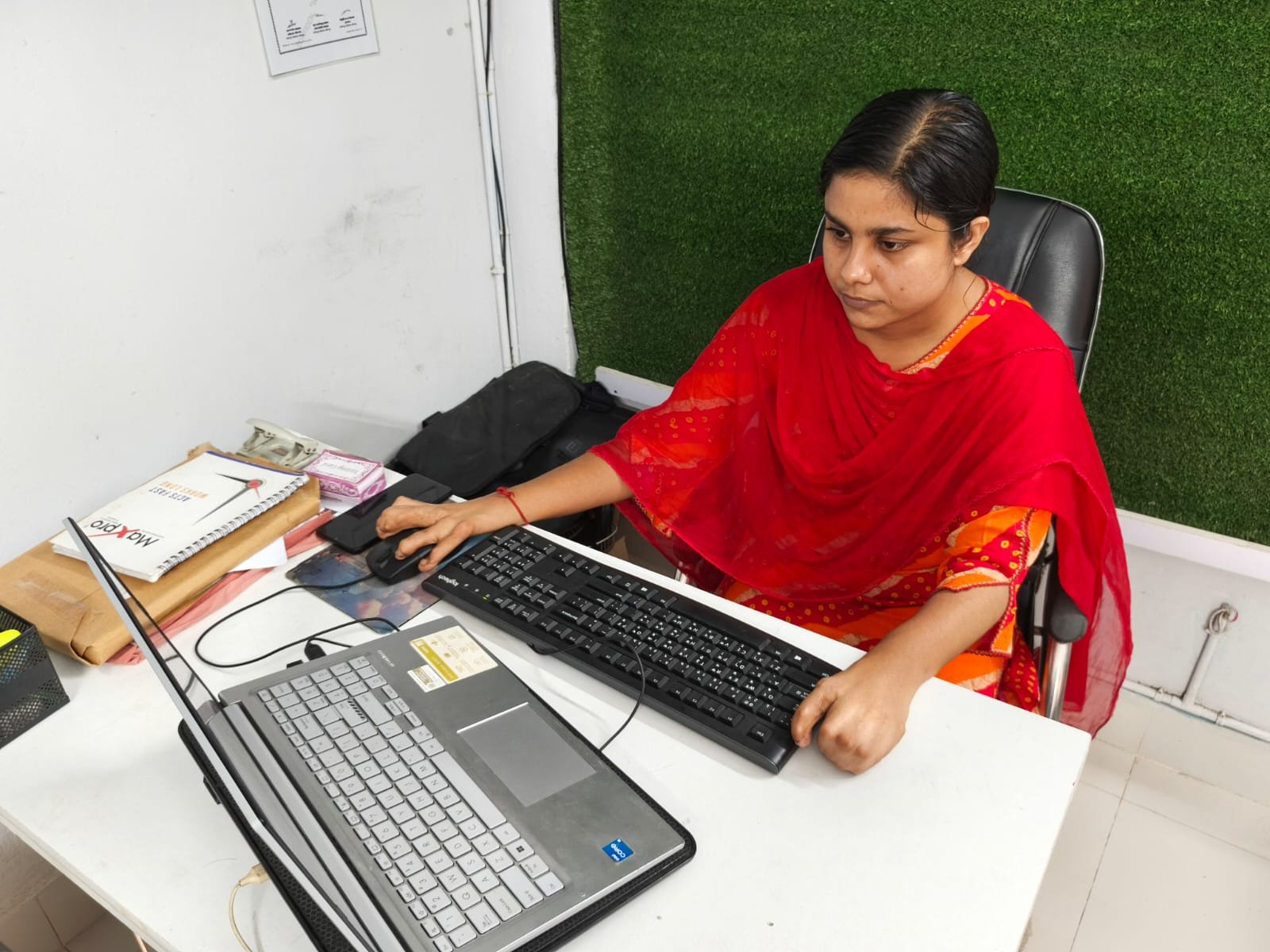
In a riverside community in Faridpur, Bangladesh, Loxme Roy grew up hearing what she couldn’t do long before anyone asked what she could. Born without fingers on her hands and raised in a religious minority household, in a country where her faith is followed by only a small share of the population, Loxme faced two separate kinds of doubt from the world around her—one about her disability, one about her identity.
Neither had anything to do with her ability. Both shaped how people treated her anyway.
Today, Loxme works as a professional graphic designer, building visual identities for clients in Faridpur and beyond. Her path there runs through a single decision: to learn design on a computer, using the internet, at a moment when almost everyone around her assumed that wasn’t realistic for someone like her.
A Childhood Shaped by Doubt
Superstition and misinformation about disability are still common in parts of rural Bangladesh, and stigma around religious-minority identity adds a second, separate layer of doubt. Loxme grew up absorbing both—not just practical barriers, but a steady undercurrent of disbelief that a young woman in her position could ever build an independent career. It is one thing to face a closed door; it is another to be told, repeatedly, that the door was never going to open for someone like you.
Loxme decided to test that assumption for herself.
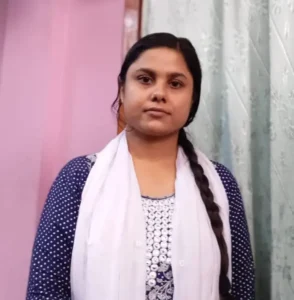
Finding a New Language of Skill
She enrolled in the Graphic Design course offered in Faridpur under Songjog Foundation’s “Hands-on Skill Development for Internet-based Application to Empower Underprivileged Women & Youth” project, delivered with support from the Internet Society Foundation‘s SCILLS grant. The course teaches practical, internet-based digital skills to underprivileged women and youth, with a deliberate focus on turning training into sustainable livelihoods rather than certificates.
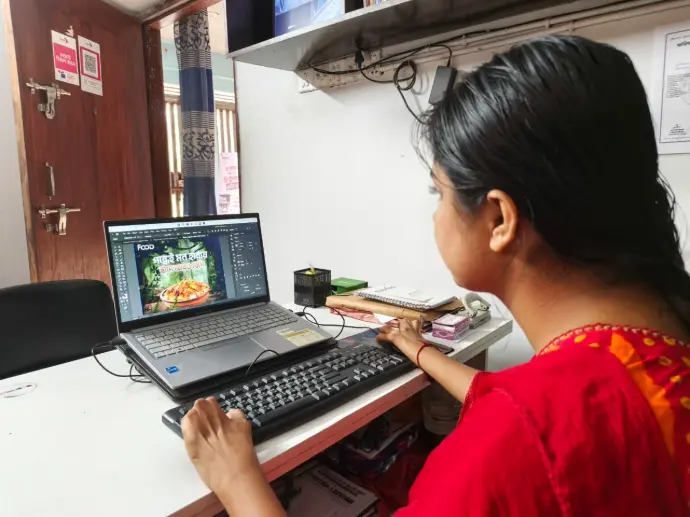
For Loxme, the course meant more than learning Adobe Photoshop and Illustrator. It meant using the internet as a genuine working tool—to learn new techniques, troubleshoot problems, and connect with clients who had never met her and had no reason to make assumptions about what she could do. The internet, it turned out, was an unusually fair place to work: a client reviewing a design file sees the design, not the hands that made it.
“The SCILLS program didn’t just teach me Photoshop and Illustrator, it gave me the internet, the confidence, and the proof that my work could speak louder than the stigma around my disability and my faith. Today, every project I deliver shows that skill, not circumstance, defines what a person can achieve, and I want every young woman who’s been told to expect less to know that same door is open to her.”
— Loxme Roy, Graphic Designer, Faridpur, Bangladesh
She approached the course with the same dedication and determination that would go on to define her career, showing up consistently and treating every practice brief as if a real client were waiting on the other end. It turned out, soon enough, that one was.
Turning Training into a Career
When the course ended, Loxme didn’t stop building. She continued developing her portfolio and pursuing client work. Today, she works as a graphic designer at Nikto IT in Faridpur District—a formal design role that did not exist for her before the training. Alongside that, she freelances remotely for local and international clients, work that depends entirely on two things the program provided: a marketable skill and reliable internet access to reach clients beyond Faridpur’s borders.
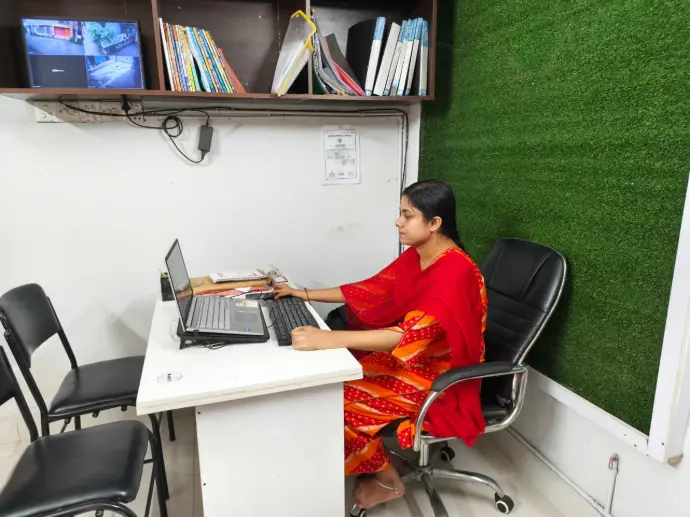
That combination—marketable skill plus meaningful connectivity—is at the core of the SCILLS-funded initiative. Since its inception, the “Hands-on Skill Development for Internet-based Application to Empower Underprivileged Women & Youth” project has reached 1,000 cumulative participants across multiple districts in Bangladesh, training underprivileged women and youth in practical digital skills that create real economic pathways. Loxme’s career is not an isolated success story; it is one visible result of a larger effort to connect marginalized communities to the digital economy.
A Ripple Effect in Faridpur
Loxme’s impact has extended well beyond her own household. In a community where disability and religious-minority status have historically been barriers, a steadily growing client list offers a compelling answer to whether digital-skills training leads anywhere: it led to a working professional designer with clients across multiple continents.
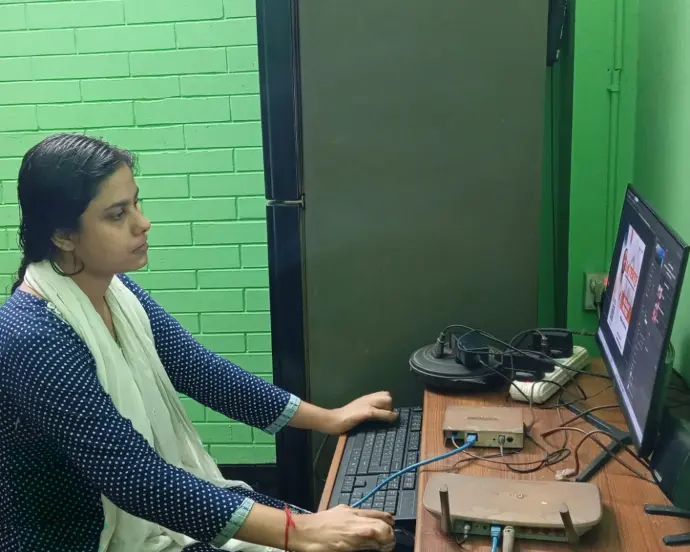
Loxme continues to grow as a designer and mentor other young women weighing the same path she took. Her career makes a quiet but firm case: that gender, faith, and physical circumstance have no bearing on who gets to build a future in the digital world.
Featured by the Internet Society
Loxme’s journey was spotlighted globally by the Internet Society on International Youth Day in their article “Youth in Action: Contributing to a More Connected and Inclusive Digital Future”. The international spotlight celebrates how meaningful connectivity and digital skills training empower young changemakers to build sustainable careers and redefine what is possible in their communities.
About the Project: Hands-on Skill Development to Empower Underprivileged Women & Youth
This story is part of the Hands-on Skill Development for Internet-based Application to Empower Underprivileged Women & Youth project jointly implemented by Songjog Foundation USA and Songjog Bangladesh, supported by the Internet Society Foundation‘s SCILLS grant. The project equips individuals with practical, market-ready digital skills that foster self-reliance, confidence, and sustainable livelihood opportunities across Bangladesh.