
Focus Area
Skill Development & Employment
We connect practical, market-relevant training with mentorship, certification, entrepreneurship and employment pathways so participants can build more secure and dignified livelihoods.
Focus Area Overview
Building Skills That Lead to Sustainable Livelihoods
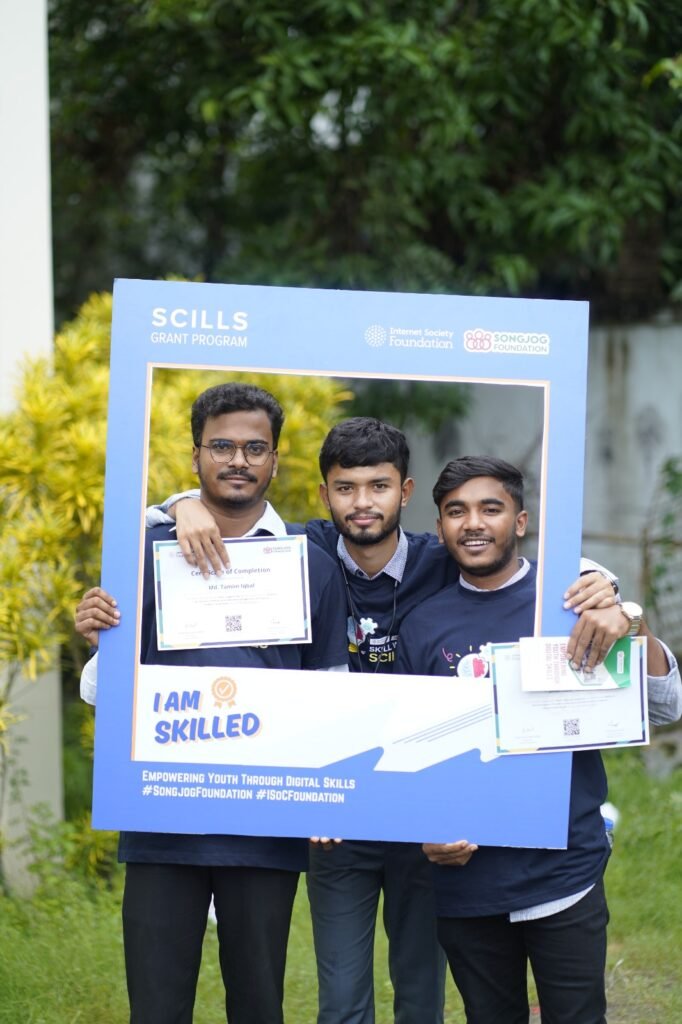
Many people from underserved communities lack access to affordable, market-relevant training, recognized certification and connections to employers or customers.
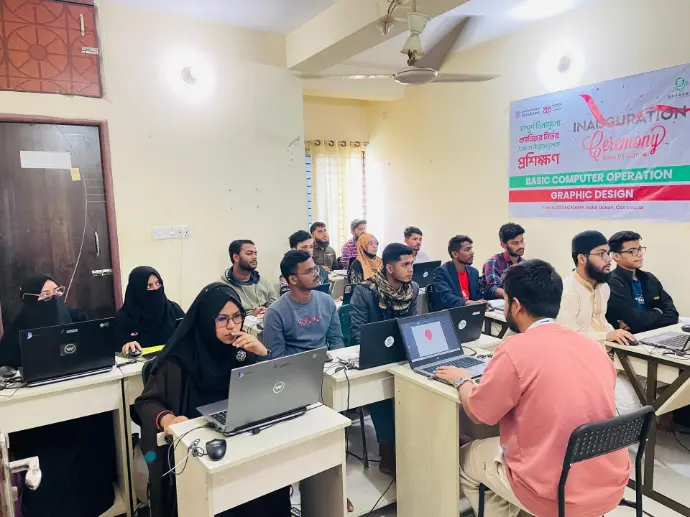
Songjog Foundation provides practical training in digital technology, vocational trades, caregiving and entrepreneurship. Our programs combine hands-on learning with mentorship, career preparation, inclusive training and pathways to employment or self-employment.
Our goal is to help participants turn relevant skills into dignified work, sustainable income and greater economic independence.
Key Challenges
Barriers to Progress
- Skills mismatch: Available training does not always reflect the capabilities that employers, clients and emerging industries actually require.
- Cost of entry: Course fees, equipment, internet access, certification and travel can place quality training beyond the reach of low-income households.
- Restricted access for women: Distance, safety concerns, caregiving responsibilities and social expectations can limit training and employment opportunities.
- Digital exclusion: Limited access to devices, connectivity and guided learning can restrict participation in technology-enabled work.
- Disability-related barriers: Inaccessible technology, training environments and recruitment practices can exclude capable people.
- The gap after training: Without mentorship, employer connections or enterprise support, completed training may not lead to sustainable income.
Our Approach
The Songjog Response
- Market-relevant training: We provide practical instruction in digital, vocational, caregiving and enterprise-related fields connected to economic opportunities.
- Hands-on learning: Participants build capabilities through guided practice, assignments, demonstrations and real-world tasks.
- Career mentorship: Practitioners and mentors help participants understand professional expectations and identify appropriate pathways.
- Certification: Where appropriate, training is connected to recognized competencies and professional certification.
- Employment linkages: We seek to connect participants with employers, clients, online marketplaces and local business opportunities.
- Entrepreneurship support: Selected participants receive business guidance, financial-literacy training and appropriate tools or startup resources.
- Inclusive learning: Adapted instruction and assistive technology make training more accessible to people with disabilities.
Impact
Evidence of Change
- People reached 5,000+
- Digital-skills participants 1,000+
- People trained through SAVE 40
- Shabolombi participants 150+
Related Projects
Projects on the Ground
Press Coverage
No press coverage is linked to this focus area yet.
Stories from the Field

July 12, 2026
Support This Work
Help participants gain practical skills, professional guidance and access to economic opportunities that can support more secure and self-directed futures.